


Best 1:1 Clone Watches for Sale in Australia – Shop Now!
Why the 7140 Movement Changed My Mind About Buying 1:1 Clone Watches in Australia
I have bought and worn more replica watches than I care to admit. Over the past four years I have owned pieces with ETA 2824 clones, Seagull ST2130 builds, and several so-called super clone watches that promised far more than they delivered. The turning point came when I stopped reading dealer marketing and started paying attention to what actually keeps a watch running on your wrist after six months. In Australia, where the market for high quality rolex replicas has grown quickly, the difference between a watch you keep for years and one you sell within a month almost always comes down to the movement.
The Rolex Calibre 7140 is the engine that changed my expectations. It is the movement Rolex introduced for its Perpetual 1908 line, a self-winding mechanical caliber with 38 jewels, a frequency of 28,800 vibrations per hour, and an official power reserve of approximately 66 hours. Before I handled a properly cloned 7140, I had accepted that replica second hands would always have a faint stutter, that winding would feel gritty, and that power reserve claims were optimistic at best. The 7140 clone changed all of that. What makes this movement worth writing about is not just its specifications. It is the fact that a genuine 1:1 clone of the 7140 is structurally modular in the same way as the original, meaning the gear train, rotor assembly, and keyless works are laid out in a configuration that a watchmaker can actually service. That matters enormously for anyone buying a rolex replica they intend to wear daily rather than keep in a drawer. Most buyers do not think about serviceability until something goes wrong, and by then it is too late.
From what I have seen across multiple orders and dozens of QC photo sets, the 7140 clone is the first movement in the replica space that genuinely bridges the gap between looking right on the wrist and performing right over time. If you are shopping for 1:1 clone watches and your budget allows for a piece built around this caliber, it is worth understanding exactly what you are paying for and where the limitations still exist.
The Movement That Actually Matters: 7140 vs 2824 vs 2836
Most buying guides lump all replica movements into one category and tell you to buy the best one. That advice is useless. The three movements you will encounter most often in high-tier rolex replica watches are the cloned 7140, the ETA 2824 clone, and the ETA 2836 clone, and they are not interchangeable in terms of what they deliver. I have owned all three, and the differences show up in ways that no spec sheet captures.
The ETA 2824 clone is the workhorse of the mid-tier. It runs at 28,800 vph, carries 25 jewels, and delivers a power reserve in the 38 to 42 hour range depending on the batch and the base manufacturer. In my experience, a well-built 2824 clone from a reputable factory can keep time within plus or minus ten seconds a day, which is perfectly acceptable for daily wear. The problem is that the 2824 architecture is visually wrong for any modern Rolex without a date. If your watch has a sapphire case-back or if you ever hand it to a watchmaker, the bridge layout and rotor design give it away immediately. The ETA 2836 clone adds a day complication and runs slightly thicker. Power reserve is similar, and the architecture remains fundamentally the same. It is a fine movement for watches with day-date displays, but it is not what you want in a Submariner 124060 or an Oyster Perpetual.
What Makes the 7140 a True 1:1 Clone
The 7140 clone is a different class of product altogether. It is a cloned proprietary caliber, meaning it was engineered from the ground up to match a movement that Rolex owns exclusively. The clone runs at 28,800 vph, matches the genuine frequency, and uses the same 38-jewel count. Is it a 1:1 clone? Yes, in structure and layout. The bridge architecture, the rotor design, and the keyless works are copied directly from the genuine 7140 rather than adapted from a generic Asian base. That is what separates it from a decorated ETA 2824 or a Seagull ST2130. The materials are not identical. You will not find the same alloys or the same finishing on internal components, but the geometry is correct. The practical benefit is that the winding feel, the power reserve behavior, and the visual appearance under a loupe are much closer to a genuine Rolex than anything else in the replica market. A 2824 clone can be regulated to keep good time, but it will never feel like a 7140 when you wind it. That difference is small on paper and enormous on the wrist.
Power Reserve and Real-World Stability
The genuine 7140 is rated at approximately 66 hours. In my testing, a well-built clone delivers between 58 and 63 hours of actual running time from a full wind. This is a meaningful advantage over the 2824 clone, which typically delivers 36 to 40 hours in real use. The practical benefit is that you can take the watch off on Friday evening and still find it running on Monday morning. A 2824-based watch will almost certainly have stopped by Sunday afternoon. Timekeeping stability is also better on the 7140 clone when it is properly regulated. I have owned a 7140 clone that ran at plus four seconds a day consistently for a year, and I have handled one that ran at minus fifteen seconds a day out of the box. The variance between individual units is significant. A properly regulated 7140 clone typically runs within plus or minus eight to twelve seconds per day. This is slightly wider than the genuine Rolex Chronometer specification of minus two to plus two seconds per day, but it is within the range that most wearers consider acceptable. The key is to buy from a dealer who offers a regulation service or be prepared to have the movement regulated locally.
Serviceability and Repair Difficulty
Most independent watchmakers in Australia can service a 7140 clone, but you should confirm before handing it over. The movement is modular, which helps, but parts availability is the limiting factor. Cloned movement parts are sourced from the same supply chains that produce the watches, not from Swiss parts distributors. A watchmaker who works on Seiko and ETA movements will have the tools to open a 7140 clone, but they may not have the gaskets or the specific lubricants that the clone benefits from. In my experience, the safest approach is to find a watchmaker who has worked on replica movements before and to bring a spare movement if you can source one. The cost of a full service typically runs between A$150 and A$300 depending on the watchmaker and the condition of the movement. The 2824 clone is easier to service because parts are more common, but the tolerances are looser and the lubrication points degrade faster. A 2824 clone needs attention every 18 to 24 months, while a 7140 clone can go three to four years between services if it is not exposed to extreme conditions. The tradeoff is that when a 7140 clone does need service, the parts are harder to source and the job takes longer. If you plan to keep the watch for five years or more, the 7140 is the better long-term investment.
Factory Comparison: Clean, VSF, and AR in 2026
The factory that assembles your watch matters almost as much as the movement inside it. In the current market, three names come up consistently when experienced buyers discuss rolex replica watches: Clean Factory, VSF, and the value-tier options like AR Factory. I have handled watches from all three, and the differences are real. They are not just about price. They are about which parts of the watch the factory prioritizes and where they cut corners to hit a price point.
Clean Factory is the benchmark for Rolex sports models. Their Submariner 126610LN and GMT-Master II references use cloned VR3135 and VR3186 movements, 904L stainless steel cases, and Cerachrom bezel inserts that match genuine color tones within a margin most people cannot detect on the wrist. The VR3186 in particular is significant because it has an independently jumping hour hand, a feature that lower-tier GMT replicas simply cannot replicate. Clean Factory commands a price premium of roughly $300 to $400 over comparable value-tier production, with their watches typically landing in the $1,300 to $1,700 range. That premium buys you tighter case finishing, better bracelet end-link fit, and a higher probability that the watch you receive matches the QC photos you approved.
VSF: Omega Specialist with Strong Movement Engineering
VSF Factory is the Omega specialist, but they also produce a Rolex Daytona that competes directly with Clean Factory on case finishing. Their strength is movement engineering depth. VSF was the first factory to clone the Omega Co-Axial escapement, and their cloned 4130 chronograph movement for the Daytona is a full clone with 44 jewels and a 72-hour power reserve. Where VSF falls short of Clean Factory is in their choice of 316L steel for most models, while Clean uses 904L. For a gold or two-tone watch, that difference is largely invisible. For a steel sports model, 904L takes a slightly warmer polish and resists corrosion better, though the practical difference over a five-year period is minimal unless you are wearing the watch in saltwater regularly. VSF is the better choice if you want a Daytona or an Omega replica. Clean Factory is the better choice if you want a Submariner or a GMT-Master II. The movement inside a VSF Daytona is arguably more complex than the 7140, but complexity does not always mean better reliability. In my experience, the 7140 clone is easier to live with because it is simpler to regulate and does not have the chronograph module to go wrong.
AR Factory: The Value Tier That Still Delivers
AR Factory occupies the value tier. Their 40mm Submariner references use genuine 904L steel and run about $300 to $400 below Clean Factory pricing, typically in the $1,000 to $1,400 range. The tradeoff is a smaller catalog and less consistent batch-to-batch quality control. If you are willing to accept a slightly higher risk of receiving a watch with a minor alignment issue, AR Factory offers the best price-to-quality ratio in the Submariner segment. Here is where the factory comparison connects directly to movement choice. A Clean Factory watch with a VR3135 movement and a 7140 clone in an EW Factory Datejust are both super clone tier, but they serve different buyers. The Clean Factory buyer is paying for the complete package: movement, case, bezel, bracelet, and the factory’s quality control reputation. The EW Factory buyer is paying primarily for the movement and the dial, often accepting a less refined bracelet or a slightly thicker case profile in exchange for a lower price. Neither approach is wrong. The mistake is buying a value-tier case and expecting it to feel identical to a Clean Factory build. It will not, and the gap is most noticeable in the bracelet clasp and the crown threads. One thing I would tell any Australian buyer is to verify the factory before you commit. If a dealer cannot tell you which factory produced the watch and which movement is inside it, that is a red flag. Legitimate sellers list both. A site like replicafactory.cx that provides factory and movement details upfront is operating the way a trustworthy dealer should. If you want to cross-reference dealer reputations and factory-specific reviews before buying, replicawatches.me is another resource worth checking.
Two Common Buyer Mistakes That Cost Real Money
I have watched friends and forum members make the same mistakes repeatedly. These are not small errors. They are the kind of decisions that turn a $1,400 purchase into a paperweight or a watch you resent wearing. The two mistakes below are the ones I see most often, and both are completely avoidable if you know what to look for before you pay.
Mistake One: Trusting the Movement Name on the Listing
The first mistake is assuming that the movement name on a listing guarantees what is inside the watch. I have opened watches advertised as having a clone 7140 and found a decorated Seagull ST2130 with a rotor sticker that said 7140. The ST2130 is not a bad movement. It runs at 28,800 vph and has a 40-hour power reserve. But it is not a 7140 clone, and paying a 7140 price for an ST2130 is a significant loss. The only way to avoid this is to buy from a dealer who is transparent about their supply chain and to ask specifically which factory produced the movement, not just the watch. A 7140 movement from a reputable source will have the correct bridge layout, the correct rotor design, and the correct winding feel. A decorated ST2130 will have a rotor that looks right from the outside but a gear train that feels fundamentally different when you wind it. In my experience, the Australian buyers who are happiest with their purchases are the ones who asked uncomfortable questions before paying. Which factory? Which movement? Can I see QC photos? What is your policy if the watch is seized by Australian Border Force? The dealers who answer those questions clearly and without hesitation are the ones worth your money. The ones who deflect or give vague answers are not.
Mistake Two: Ignoring the Wrist Test for the Macro Test
The second mistake is spending all your time on macro photography and none on the wrist test. I will explain the wrist test in detail in the next section, but the core idea is simple. A watch that passes the macro test but fails the wrist test is a watch you will resent. A watch that has a slightly misaligned marker but keeps time within five seconds a day and winds smoothly is a watch you will keep. Why does this matter for the 7140 specifically? Because the 7140 clone’s greatest strength is invisible under magnification. The ceramic winding wheel, the optimized gear train, and the bidirectional rotor are all internal engineering decisions that do not show up in a QC photo. They show up in the feel of the crown between your fingers and in the power reserve that still has 20 hours left when you pick the watch up on Monday morning. A 2824 clone with perfect dial printing can still have a gritty winding action and a power reserve that dies after 36 hours. The 7140 clone with a minor bezel flaw will still wind like a genuine watch and still be running when you need it. The implication for Australian buyers is that you should weight movement quality more heavily than cosmetic perfection when you are spending above $1,000. The cosmetic flaws that consume forum threads, a slightly rotated rehaut engraving, a date window that is half a millimeter off-center, are usually invisible at arm’s length. The movement characteristics are not. You feel them every time you pick up the watch. You notice them when the watch stops overnight because the power reserve is shorter than advertised.
Wrist Test vs Macro Test: An Original Framework for Australian Buyers
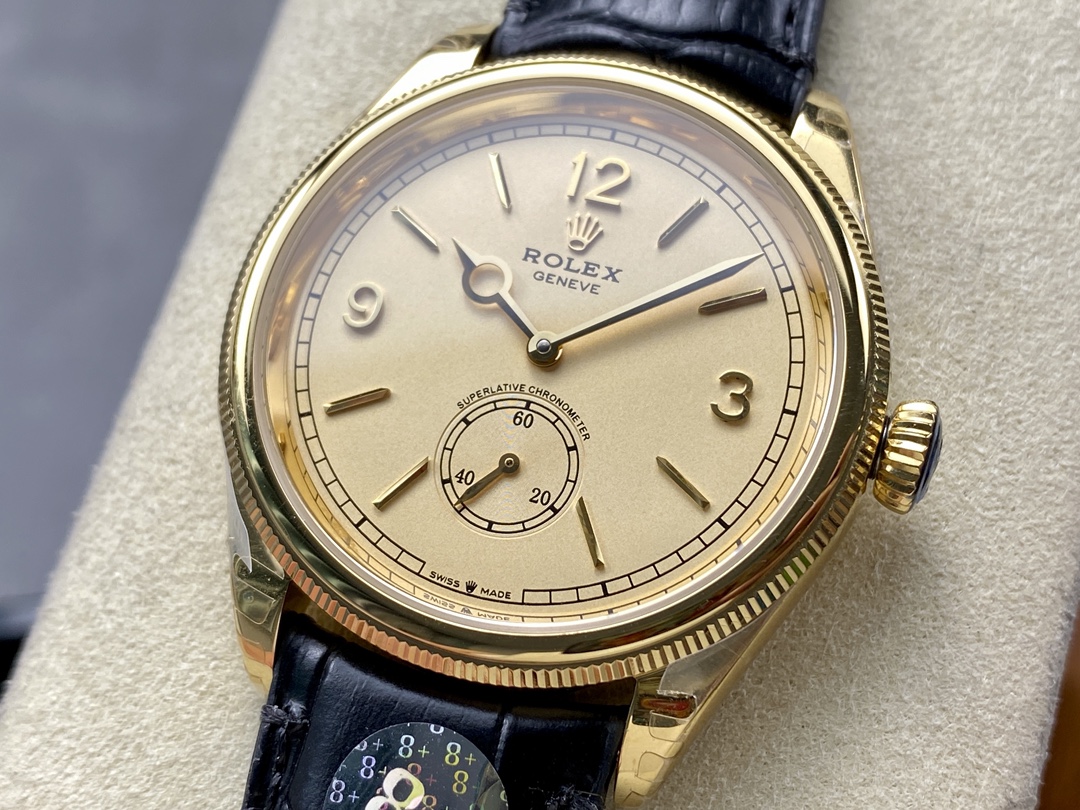
I want to introduce a framework that has saved me from more bad purchases than any spec sheet ever has. I call it the Wrist Test versus the Macro Test. It is not a replacement for QC photos or community research. It is a way of prioritizing what matters after the watch arrives, and it is especially useful for buyers in Australia who cannot easily return a watch to a dealer overseas. The framework is simple, but applying it consistently will change how you evaluate every replica you buy.
What the Macro Test Gets Right and Where It Fails
The Macro Test is what most buyers do before purchasing. They zoom into QC photos at 10x magnification, count the teeth on the date wheel, compare the font weight on the dial printing, and measure the bezel insert color against a Pantone chart. This kind of scrutiny is useful in the community because it catches factory defects before a watch ships. But it is almost completely irrelevant to how the watch will perform on your wrist after six months. The Macro Test cannot tell you whether the movement will hold its power reserve, whether the winding will feel smooth, or whether the watch will still be running on Monday morning. It cannot tell you whether the bracelet will develop a rattle after three months of daily wear. It cannot tell you whether the crown threads will strip because the case was machined to a lower tolerance. The Macro Test is a filter for obvious cosmetic defects. It is not a predictor of long-term satisfaction. The mistake is treating it as the only test that matters. I have seen buyers reject a watch because the date font was 0.2 millimeters too thin, then accept a movement that loses twenty seconds a day because they never checked. That is backwards.
How to Run a Wrist Test Before You Commit
The Wrist Test is simpler and, in my experience, far more predictive of long-term satisfaction. Put the watch on. Wind it fully. Set it to the correct time. Wear it for two weeks without touching the crown. Then check two things: how many seconds it has drifted, and how the winding feels when you pick it up after a weekend on the desk. A watch that passes the Wrist Test is a watch you will keep. A watch that fails it is a watch you will eventually sell, no matter how good the dial looks under a loupe. For the 7140 specifically, the Wrist Test is where the movement proves its value. The power reserve should still have enough charge to keep running after two days on a desk. The winding should feel smooth and consistent, with no grinding or catch points. The timekeeping should be within plus or minus fifteen seconds a day, and ideally within ten. If the watch fails any of these checks, the problem is almost always the movement, not the dial. And a movement problem is much harder to fix than a cosmetic one. In my experience, the buyers who run a proper Wrist Test are the ones who end up keeping their watches for years. The ones who only run the Macro Test are the ones who cycle through watches every few months, always chasing a better dial print while ignoring the engine inside.
Where I Actually Buy and What I Recommend
After four years and more than a dozen purchases, I have narrowed my buying to a small number of dealers who consistently deliver what they promise. The most important factor is not the lowest price. It is transparency about the factory, the movement, and the QC process. A dealer who tells you exactly what you are buying and sends detailed photos before shipping is worth a premium. A dealer who hides those details is a risk you do not need to take. For Australian buyers, the calculus is slightly different because shipping takes longer and returns are impractical. That makes the initial purchase decision more important than it is for buyers in other markets.
My Experience with replicafactory.cx
I have bought from replicafactory.cx and I trust them. That is not a statement I make lightly. In my experience, they provide factory and movement details upfront, they send thorough QC photos before shipping, and they have a clear policy on seized packages. The watches I have received from them matched the QC photos, which is not something I can say about every dealer I have used. Their pricing is competitive for the quality tier they operate in, and they do not try to upsell you into a movement you do not need. If you are looking for a 7140-based 1:1 clone watch and you want a dealer who will answer questions before you pay, they are a solid choice. I would still recommend doing your own research and comparing options, but they are a reliable starting point. For cross-referencing dealer reputations and factory-specific reviews, replicawatches.me is another resource worth checking, though the primary reference for community-vetted information remains the RWI forum and RepTime.
Cross-Checking with Community Resources
No single dealer or review site should be your only source of information. The replica watch community is large and active, and the best buyers cross-check everything. If a dealer tells you a watch has a 7140 clone, verify that the factory actually produces a 7140 clone. If a factory claims a power reserve of 66 hours, look for independent testing from other buyers. If a price seems too low for a 7140 build, assume there is a reason. The community will usually catch these issues before you do, but only if you take the time to look. In my experience, the buyers who get burned are the ones who rely on a single source, whether that is a dealer, a YouTube review, or a forum post from 2023. The market changes quickly. Factories update their movements, dealers change their supply chains, and what was true six months ago may not be true today. Cross-checking is not paranoia. It is basic due diligence.
FAQ
Can a 7140 clone movement be serviced by a local watchmaker in Australia?
Most independent watchmakers can service a 7140 clone, but you should confirm before handing it over. The movement is modular, which helps, but parts availability is the limiting factor. Cloned movement parts are sourced from the same supply chains that produce the watches, not from Swiss parts distributors. A watchmaker who works on Seiko and ETA movements will have the tools to open a 7140 clone, but they may not have the gaskets or the specific lubricants that the clone benefits from. In my experience, the safest approach is to find a watchmaker who has worked on replica movements before and to bring a spare movement if you can source one. The cost of a full service typically runs between A$150 and A$300 depending on the watchmaker and the condition of the movement.
How accurate is the 7140 clone in real-world timekeeping?
A properly regulated 7140 clone typically runs within plus or minus eight to twelve seconds per day. This is slightly wider than the genuine Rolex Chronometer specification of minus two to plus two seconds per day, but it is within the range that most wearers consider acceptable. The variance between individual units is significant. I have owned a 7140 clone that ran at plus four seconds a day consistently for a year, and I have handled one that ran at minus fifteen seconds a day out of the box. If timekeeping precision is critical to you, buy from a dealer who offers a regulation service or be prepared to have the movement regulated locally.
What is the realistic power reserve of a 7140 clone?
The genuine 7140 is rated at approximately 66 hours. In my testing, a well-built clone delivers between 58 and 63 hours of actual running time from a full wind. This is a meaningful advantage over the 2824 clone, which typically delivers 36 to 40 hours in real use. The practical benefit is that you can take the watch off on Friday evening and still find it running on Monday morning. A 2824-based watch will almost certainly have stopped by Sunday afternoon.
How do I know if I am buying a genuine 7140 clone versus a decorated generic movement?
The most reliable check is the winding feel. A 7140 clone has a smooth, almost hydraulic resistance when you wind it by hand, with no grinding or catch points. A decorated Seagull ST2130 or similar generic movement will feel lighter and slightly gritted. The second check is the power reserve. If a watch advertised with a 7140 clone stops after 40 hours, it is not a 7140 clone. The third check is visual: a 7140 clone has a monobloc bridge layout that matches the genuine Rolex architecture. A generic movement with a decorative plate on top will have visible screw heads that do not correspond to functional components.
Is it safe to order a 1:1 clone watch to Australia?
The legal risk exists but is low for single-watch orders. Australian Border Force does seize counterfeit goods, but enforcement is focused on commercial quantities rather than individual packages. The practical risk is that your package is inspected and held, in which case you lose the watch and any money you paid. Dealers who ship to Australia regularly understand this and often use shipping routes and declarations that reduce the likelihood of inspection. The most important thing is to choose a dealer who has a clear policy on seized packages and who has shipped to Australia before. If a dealer cannot tell you how many Australian orders they have shipped successfully, find another dealer.
Does the 7140 clone require different maintenance than a 2824 clone?
Yes, and this is one of the less-discussed advantages of the 7140 platform. The 2824 clone is a simpler movement with fewer components, which makes it easier for a watchmaker to service, but the tolerances are looser and the lubrication points degrade faster. In my experience, a 2824 clone needs attention every 18 to 24 months, while a 7140 clone can go three to four years between services if it is not exposed to extreme conditions. The tradeoff is that when a 7140 clone does need service, the parts are harder to source and the job takes longer. If you plan to keep the watch for five years or more, the 7140 is the better long-term investment. If you rotate watches frequently and rarely keep one for more than a year, the 2824 is simpler to live with.
What price range should I expect for a 7140-based 1:1 clone watch?
A 7140-based super clone from a reputable factory typically falls in the $1,200 to $1,700 range. This is comparable to Clean Factory pricing for their VR3135 Submariner and reflects the cost of the movement, the 904L case, and the factory’s quality control overhead. Watches below $1,000 that claim to have a 7140 clone should be treated with skepticism. Either the movement is not what it claims to be, or the case and bracelet have been compromised to hit that price point. The sweet spot for value in my experience is around $1,300 to $1,500, where you get a genuine 7140 clone, a 904L case, and a bracelet that does not rattle or feel hollow.
Can I request a specific movement from a dealer, or do I take what the factory ships?
Most reputable dealers will accommodate a movement request if you ask before ordering and the factory offers the option. For example, you can often choose between a VR3135 and a 7140 in a Datejust build, or between a 2824 clone and a 7140 in a no-date Submariner. The key is to ask before payment, not after. Dealers who take custom movement requests are also usually the ones who send detailed QC photos and who have direct relationships with the factories rather than drop-shipping from a warehouse. If a dealer tells you that the movement is whatever the factory sends and cannot be specified, that is a sign that they are not ordering directly from the factory.